What Are Healthy Online Habits? 7 Practical Tips
35% off on product page · save $10.76
What Are Healthy Online Habits? 7 Practical Tips

Use the Internet With Intention
Healthy online habits are practices that help you use the internet in ways that support your attention, well-being, privacy, and relationships, rather than letting every notification or recommendation direct your day. Before opening an app or browser tab, decide what you want to accomplish—such as answering a message, researching a purchase, or taking a short break—and give yourself a natural stopping point.
For focused work, keep only the tabs you need open and silence nonessential notifications so interruptions do not repeatedly pull you away from the task. When you browse for enjoyment, you can still be intentional: choose what you want to watch or read instead of continuing indefinitely through an automatic feed.

Set Boundaries That Fit Your Day
Choose limits that make sense for your schedule, such as keeping your phone out of reach during meals, pausing social media while you work, or putting devices away before bedtime. You do not need to avoid screens entirely; the goal is to notice when online time is crowding out sleep, movement, responsibilities, or in-person connection and adjust accordingly.
Build in regular breaks by looking away from your screen, changing position, or stepping outside, especially during long stretches of work or study. If a particular app leaves you feeling distracted or upset, try muting accounts, changing notification settings, or taking a break from it and see whether your experience improves.
Check the product’s listed specifications when evaluating set boundaries that fit your day.
Featured in this guide
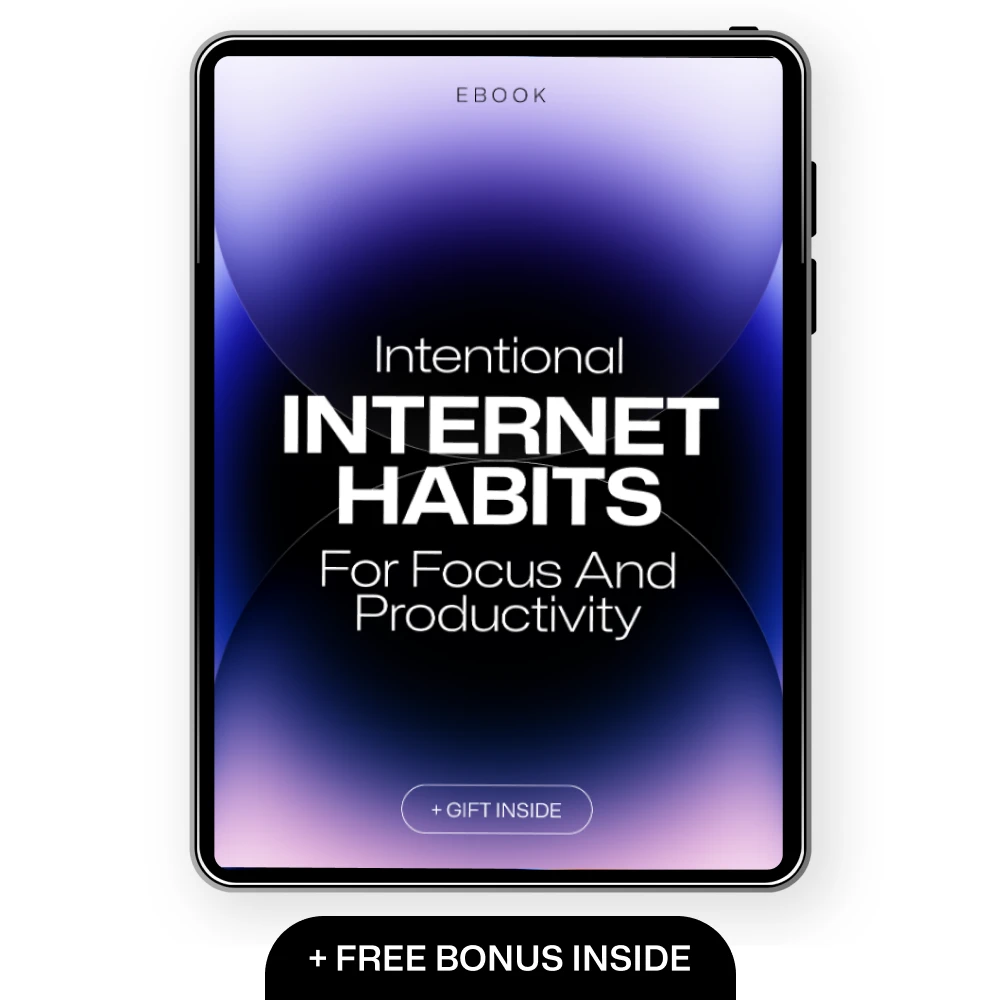
Intentional Internet Habits for Focus and Productivity: Master Your Digital Life with Purposeful Browsing
Protect Your Privacy and Treat Others Well
Use a unique password for each important account, enable two-factor authentication where available, and pause before opening unexpected links or sharing sensitive information. Review privacy settings periodically and consider whether a post, photo, or location detail needs to be public before you share it.
Healthy habits also include communicating respectfully, checking information before passing it along, and giving yourself permission to leave conversations that become hostile. When a message seems unusually urgent or requests money or personal details, verify it through a trusted contact method rather than responding immediately.
Make Your Routine Sustainable
Start with one change you can repeat, such as checking email at planned times or charging your phone away from your bed, then adjust it as your needs change. A useful boundary should make your day easier to manage, not add another source of pressure or require you to track every minute online.
Our featured guide, Intentional Internet Habits for Focus and Productivity: Master Your Digital Life with Purposeful Browsing, explores the broader topic of purposeful browsing. Our team recommends beginning with the online situations that most often interrupt your priorities and choosing a practical response for each one.
FAQ
What are 7 healthy habits?
Seven useful online habits are setting a browsing goal, managing notifications, taking screen breaks, protecting passwords, using two-factor authentication, verifying information, and communicating respectfully. You can adopt them gradually, starting with the habit that addresses your biggest daily challenge.
See if Intentional Internet Habits for Focus and Productivity: Master Your Digital Life with Purposeful Browsing fits your setup





Leave a comment